Interventional Radiology Treatment in Pakistan | NIRS Guide
For many patients, the idea of undergoing a medical procedure brings both curiosity and concern. Questions like “Will it hurt?”, “How long will it take?”, or “What should I bring?” are very common. The good news is that Interventional Radiology (IR) procedures are among the safest, least invasive, and most effective medical treatments available today.
At Northern Interventional Radiology Services (NIRS) Abbottabad, patients from Islamabad, Rawalpindi, KPK, and across Pakistan regularly undergo procedures like tumor ablation, angioplasty, pain management injections, and biopsies. These treatments are performed with precision using image-guided technology, allowing faster recovery compared to surgery.
If you are scheduled for an interventional radiology procedure, this guide will walk you through step-by-step what to expect on the day of your treatment.
1. Arrival and Registration
On the day of your procedure, you will arrive at NIRS Abbottabad’s diagnostic and interventional radiology center. Patients are advised to:
- Arrive at least 30 minutes before the scheduled time.
- Bring medical reports, imaging scans, test results, and medication lists.
- Wear comfortable clothing and avoid jewelry or valuables.
The registration team will confirm your details, and a nurse will guide you through the next steps.
2. Pre-Procedure Consultation
Before your treatment begins, you will meet with an interventional radiologist. This step ensures that:
- Your medical history and recent symptoms are reviewed.
- Any allergies (especially to contrast dye or medications) are noted.
- The procedure is explained in simple terms, and you can ask questions.
- Informed consent is signed, confirming you understand the process.
This consultation helps reduce anxiety and builds confidence. Patients often appreciate how NIRS doctors take time to listen and explain every detail clearly.
3. Preparing for the Procedure
Once consultation is complete, you will be taken to a preparation area where:
- A nurse may insert an IV line for medication or sedation.
- You might be asked to change into a hospital gown.
- Blood pressure, heart rate, and oxygen levels will be monitored.
- In some cases, light sedation or local anesthesia is given for comfort.
Unlike traditional surgery, general anesthesia is rarely required, which means fewer risks and faster recovery.
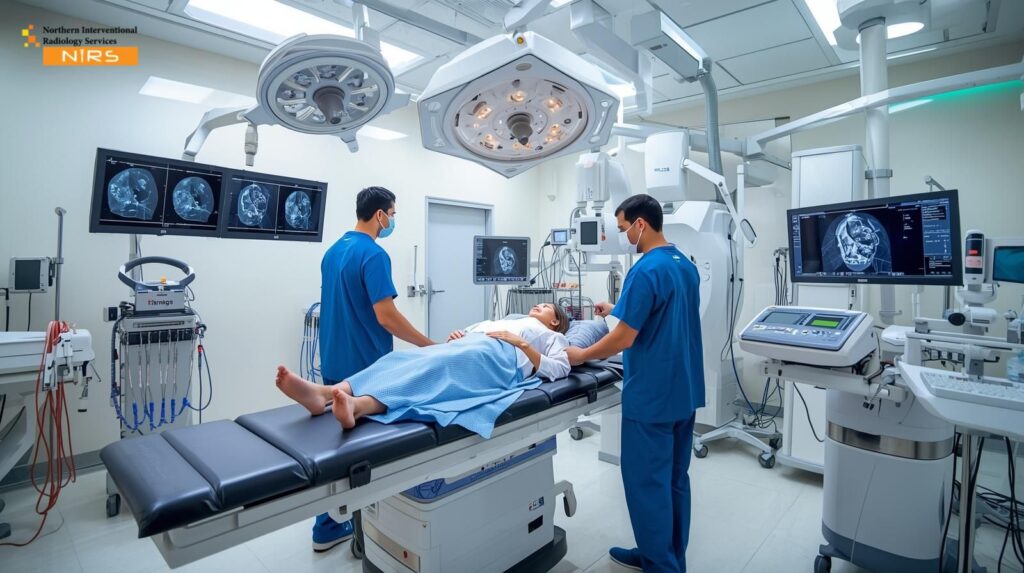
4. Inside the Procedure Room
When you are moved to the interventional radiology suite, you will notice advanced equipment including X-ray, CT, or ultrasound machines. These allow the radiologist to see inside your body in real time.
During the procedure:
- You will be awake, but relaxed and comfortable with mild sedation.
- A small incision or needle entry point will be made, usually less than 1 cm.
- Using imaging guidance, the radiologist will precisely target the treatment area.
- Procedures may include:
- Angioplasty or stenting for blocked blood vessels.
- Tumor ablation to destroy abnormal growths.
- Embolization to block blood supply to tumors or abnormal vessels.
- Pain management injections for back, joint, or nerve pain.
- Biopsies for accurate diagnosis.
Most treatments take 30–90 minutes, depending on the complexity.
5. After the Procedure: Recovery Area
Once your treatment is complete:
- You will be moved to a recovery room for monitoring.
- Nurses will check your vitals, bandages, and comfort levels.
- Light refreshments may be offered once you are fully awake.
- Most patients go home the same day, though some may stay overnight for observation (depending on the procedure).
Compared to surgery, recovery from interventional radiology is quicker, less painful, and without large scars.
6. Going Home and Aftercare
Before discharge, you will receive detailed aftercare instructions such as:
- How to care for the small incision site.
- Which medications to take or avoid.
- Warning signs to watch for (bleeding, swelling, or unusual pain).
- Follow-up appointment scheduling.
Most patients resume normal activities within 1–2 days, compared to weeks of recovery after surgery.
Benefits of Interventional Radiology at NIRS Abbottabad
Patients choose NIRS Abbottabad because of:
- ✅ Minimally invasive techniques with faster healing.
- ✅ Expert interventional radiologists with global experience.
- ✅ Modern imaging technology for precision and safety.
- ✅ Patient-centered care, ensuring comfort and clear communication.
- ✅ Safe and effective alternatives to surgery.
When to Consider Interventional Radiology
If you suffer from:
- Chronic pain (back, leg, or joint).
- Tumors or growths requiring targeted treatment.
- Blocked blood vessels or circulation problems.
- Need for a safe biopsy or minimally invasive diagnostic procedure.
👉 Interventional radiology could be the right solution for you.
Conclusion
Undergoing a medical procedure does not need to be stressful. With interventional radiology, patients experience safe, precise, and minimally invasive treatments that deliver excellent results without the risks of major surgery.
At NIRS Abbottabad, every patient is guided step by step—from arrival to aftercare—ensuring a smooth and comfortable experience. Whether you are seeking tumor treatment, pain relief, or vascular therapy, NIRS provides advanced interventional radiology services for patients across Islamabad, Rawalpindi, KPK, and Northern Pakistan.
If you have an upcoming procedure, remember: you are in safe hands at NIRS Abbottabad.