Fibroids and Pelvic Pain Solutions with Interventional Radiology
Fibroids (also known as uterine leiomyomas) are very common benign (non-cancerous) growths of the uterus. For many women they cause symptoms like heavy menstrual bleeding, pelvic pain or pressure, frequent urination or constipation, and may impact quality of life or fertility. Fortunately, modern advances in interventional radiology offer safe, effective, minimally invasive solutions—particularly at NIRShttps://nirs.com.pk/, where our experienced team specialises in women’s health interventions.
Understanding Fibroids and Pelvic Pain
Fibroids develop in the muscle tissue of the uterus, and although many remain small and asymptomatic, others grow larger or more numerous and trigger significant symptoms. Pelvic pain and pressure often come from the size or location of fibroids, or from degeneration or vascular changes within them. Common signs and symptoms include:
- Heavy menstrual bleeding (menorrhagia)
- Prolonged or irregular periods
- Pelvic pain, pressure or fullness
- Lower back pain, frequent urination, or constipation due to bulk effects
- Infertility or complications in pregnancy in some cases
Because fibroids vary in size, number and location and because each woman’s situation is unique, the decision on how to treat them requires careful evaluation. For many women who wish to avoid surgery or preserve fertility, interventional radiology offers a compelling alternative.
The Role of Interventional Radiology for Fibroids
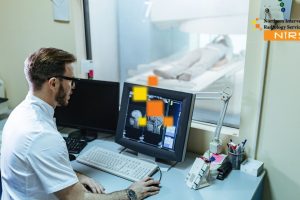
Interventional radiology (IR) uses imaging guidance (such as ultrasound, fluoroscopy or CT) to perform treatment through tiny punctures rather than large surgical incisions. At NIRS, this means women can access cutting-edge treatments with shorter hospital stays, quicker recovery and fewer risks compared to traditional surgery.
One of the most established IR treatments for fibroids is uterine fibroid embolisation (UFE) (also called uterine artery embolisation, UAE). In this procedure, a catheter is guided into the uterine arteries and tiny embolic particles are injected to block the blood supply to the fibroids, causing them to shrink, reducing symptoms and preserving the uterus. Many international sources note UFE as a safe and effective option. Interventional Radiology
What Happens During UFE / IR Treatment?
- Pre-procedure evaluation – At NIRS our team conducts detailed imaging (ultrasound, MRI) and clinical assessment to map fibroid size, number, vascular supply and to confirm suitability.
- Procedure day – Under local anaesthesia (often with mild sedation), a small arterial access (groin or wrist) is made. Using fluoroscopy and contrast injection the catheter is guided to uterine arteries. Embolic particles are then released to block fibroid blood supply.
- Post-procedure care – Patients are monitored for a few hours or overnight, given pain relief (since some cramping is expected) and discharged with instructions.
- Recovery & outcome – Most women resume light activities within a few days. Over weeks to months the treated fibroids shrink and symptoms improve—many report less bleeding, less pain, and reduced bulk pressure sensations.
Why Choose IR at NIRS for Fibroids & Pelvic Pain
- Minimally invasive – No large incisions, stitches or long hospital stays; recovery is quicker.
- Uterus-preserving – Unlike hysterectomy, IR treatments retain the uterus, which may be important for fertility or personal choice.
- Shorter recovery time – Women often resume normal life much sooner compared to traditional surgery.
- Lower risk profile – Less blood loss, fewer infections, lower complication rates.
- Tailored care by specialists – At NIRS our interventional radiologists such as Dr Atif Nawaz and Dr Muhammad Ismail bring advanced expertise in women’s health IR treatments.
Who Is a Good Candidate?
IR fibroid treatment is especially appropriate for women who:
- Have symptomatic fibroids (heavy bleeding, pain, pressure)
- Wish to avoid major surgery or preserve the uterus
- Have multiple fibroids or prior failed medical therapy
- Are medically suitable (after evaluation) for minimally invasive procedures
During your consult at NIRS, our team will review imaging, discuss expectations, fertility goals, and help you choose the optimal option—whether IR treatment, surgical myomectomy or alternative therapies.
What to Expect and Recovery Tips
- Cramping and discomfort for 24-72 hours post procedure is common but manageable with medications.
- Most women return home within 24-48 hours and resume light activity within a week.
- Avoid heavy lifting and strenuous exercise for 1–2 weeks as advised.
- Attend follow-up imaging and check-ups to monitor fibroid shrinkage and symptom relief.
- Adopt healthy lifestyle habits—regular exercise, balanced diet, avoiding obesity—to support pelvic health and reduce recurrence risk.
Addressing Pelvic Pain Alongside Fibroids
Pelvic pain often co-exists with fibroids, sometimes from the fibroids themselves, or from related conditions like pelvic congestion syndrome. IR specialists at NIRS are equipped to assess and treat pelvic pain through image-guided therapies including targeted embolisation for pelvic veins, nerve blocks or other minimally invasive interventions—offering relief that avoids open pelvic surgery.
Final Thoughts
Fibroids and pelvic pain can significantly impact a woman’s life, but advanced interventional radiology offers hope, modern solutions and choices. At NIRS, our commitment to women’s health, minimally invasive care and personalised treatment means you don’t have to face surgery alone or accept long recovery times.
If fibroids are causing heavy bleeding, pelvic pressure, pain or affecting your daily life, schedule a consultation at NIRS. Our team will assess your situation, explain the options—including IR treatments—and help you choose the path that aligns with your health goals and lifestyle.
Your health matters. With interventional radiology, relief is possible.