Future of Minimally Invasive Medical Treatments | NIRS
The history of medicine is a journey from the general to the specific, from the invasive to the microscopic. We are currently witnessing a seismic shift where the traditional scalpel is being replaced by the catheter and the imaging screen. At Northern Interventional Radiology Services (NIRS), we are not just observers of this change; we are the architects. The Future of Minimally Invasive Medical Treatments is already here, and it is transforming patient care across Pakistan.
By integrating robotics, artificial intelligence, and ultra-high-resolution imaging, NIRS is providing solutions that were once considered science fiction. Below, we explore the trends and technologies that define the next decade of medical excellence.
1. Beyond the Scalpel: The Rise of Interventional Radiology
The core of the Future of Minimally Invasive Medical Treatments lies in Interventional Radiology (IR). IR allows doctors to treat complex diseases through a tiny pinhole, usually in the wrist or the groin.
- Precision Navigation: In the coming years, 3D mapping and augmented reality (AR) will allow our specialists at NIRS to overlay a patient’s MRI or CT scan directly onto their body during a procedure. This ensures that every movement is accurate to the millimeter.
- Smart Catheters: We are seeing the development of “sensing” catheters that can measure blood pressure and oxygen levels from inside a tumor or a blocked artery, providing real-time data that traditional surgery simply cannot match.
2. Artificial Intelligence in Image Guidance
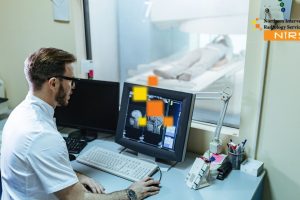
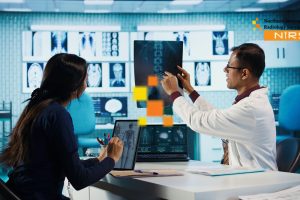
AI is the silent partner in the Future of Minimally Invasive Medical Treatments. At NIRS, we envision a future where AI algorithms assist our radiologists in identifying the most efficient route to a vascular blockage or a cancerous growth.
- Automated Detection: AI can highlight subtle vascular anomalies that the human eye might miss, ensuring that “Top Conditions Treated by Interventional Radiology” are managed with 100% diagnostic accuracy.
- Predictive Outcomes: By analyzing thousands of previous cases, AI helps NIRS doctors predict how a patient will respond to a specific treatment, allowing for truly personalized medicine.
3. Targeted Oncology: The Death of Systemic Side Effects
The Future of Minimally Invasive Medical Treatments is most promising in the field of cancer. Traditional chemotherapy travels through the entire body, causing hair loss and nausea. The future at NIRS is “Local Delivery.”
- Radioembolization (Y-90): Instead of radiating the whole body, we deliver radioactive beads directly into the blood vessels of a tumor.
- Liquid Biopsies and Precision Ablation: Using image guidance, we can now “burn” or “freeze” tumors (Ablation) without ever cutting the skin. This approach preserves organ function and keeps the patient’s quality of life intact.
4. The End of Long Hospital Stays
One of the most human-centric aspects of the Future of Minimally Invasive Medical Treatments is the death of the long hospital stay.
- Walk-In, Walk-Out Care: At NIRS, we have already perfected the “day-case” model. In the future, even the most complex vascular reconstructions will be performed in an outpatient setting.
- Rapid Recovery: When you don’t cut muscle, you don’t need weeks to heal. Our patients in Islamabad and Abbottabad are returning to work in 48 hours, a trend that will soon become the global standard for all medical interventions.
5. Cardiovascular Breakthroughs: No-Surgical Heart & Vessel Repair
Blocked arteries are a leading cause of disability. The Future of Minimally Invasive Medical Treatments at NIRS focuses on bio-resorbable stents—stents that do their job and then simply dissolve once the artery has healed.
- Advanced Angioplasty: We are moving toward “no-implant” zones where specialized balloons coated with medication are used to keep vessels open without leaving any permanent metal behind.
Why NIRS is the Gateway to This Future
Choosing Northern Interventional Radiology Services (NIRS) means choosing a facility that stays ahead of the curve. While others are catching up, NIRS is already implementing the Future of Minimally Invasive Medical Treatments today.
- Global Expertise, Local Care: Our specialists are trained in international protocols, bringing the world’s most advanced “pinhole” techniques to the Hazara region and the capital.
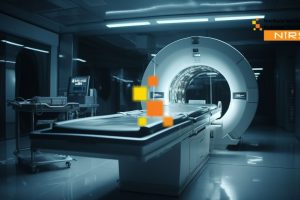
- State-of-the-Art Infrastructure: We invest in the highest-grade imaging suites, which are the “operating rooms of the future.”
- A Holistic Philosophy: We believe the best surgery is the one that is never performed. We prioritize the “least invasive” path to health.
The Economic Impact of Minimal Invasion
The Future of Minimally Invasive Medical Treatments is also an economic necessity. By reducing hospital stays and complication rates, NIRS is making high-end healthcare more affordable for the average Pakistani family. Less time in the hospital means less financial burden and a quicker return to the workforce.
Conclusion: Embrace the Healthcare Revolution
The Future of Minimally Invasive Medical Treatments is not just about machines; it is about people. It is about a grandmother being able to walk again after a non-surgical artery clearance. It is about a father being treated for liver cancer without losing his strength.
At NIRS, we are dedicated to this future. We invite you to explore a world where healing is precise, safe, and fast. The era of the large surgical scar is ending; the era of image-guided precision has begun.
Step Into the Future with NIRS:
- Phone: +92 316 5212015
- Website: nirs.com.pk
- Visit Us: Islamabad & Abbottabad
- Email: info@nirs.com.pk