
Breast Tumor Marker Clip Placement
Expert breast imaging and surgical guidance services available at NIRS.
Breast Tumor Marker Clip Placement
Founded by Dr. Atif Nawaz and Dr. Muhammad Ismail Alvi, the Interventional Radiology Unit at NIRS Pakistan is committed to delivering safe, precise, and patient-centered vascular access care. Through advanced image-guided techniques, we offer Peripherally Inserted Central Catheter (PICC Line) Placement — a minimally invasive procedure that provides reliable long-term venous access for patients requiring prolonged intravenous therapies such as medications, antibiotics, nutrition, or chemotherapy.
Our expert specialists emphasize meticulous planning, accurate placement, and compassionate patient care — ensuring reduced complications, enhanced patient comfort, improved treatment delivery, and better overall outcomes through advanced, image-guided vascular interventions.
Understanding Breast Tumor Marker Clip Placement
What Is It?
A PICC line is a long, thin, flexible tube inserted into a vein in the upper arm and advanced until it reaches a large central vein near the heart. It is used to deliver medications, nutrition, or fluids directly into the bloodstream over a long period of time.
Why is it Done?
- To administer long-term intravenous (IV) antibiotics, chemotherapy, or other medications.
- To provide nutrition (TPN) when oral intake is not possible.
- To avoid repeated needle pricks and preserve peripheral veins.
- To facilitate frequent blood draws and IV access in patients requiring prolonged treatment.
Benefits
- Comfort: Reduces the need for repeated needle insertions.
- Efficiency: Provides reliable and long-term IV access.
- Versatility: Suitable for a wide range of treatments (antibiotics, chemotherapy, nutrition).
- Safety: Lower risk of vein irritation compared to standard IV lines.
- Convenience: Can remain in place for weeks to months, supporting ongoing care.
Why Choose NIRS Pakistan?
At NIRS Pakistan, our expert Interventional Radiologists use advanced imaging guidance to provide safe and precise PICC Line insertions. This ensures reliable venous access, minimizes complications, and enhances patient comfort and care during long-term treatments.
Case Highlights
From Diagnosis to Recovery: Comprehensive Care at Every Step
Case of 48-year-old male.
History : Patient with prolonged intravenous antibiotic therapy requirement for osteomyelitis; multiple failed peripheral IV access attempts.
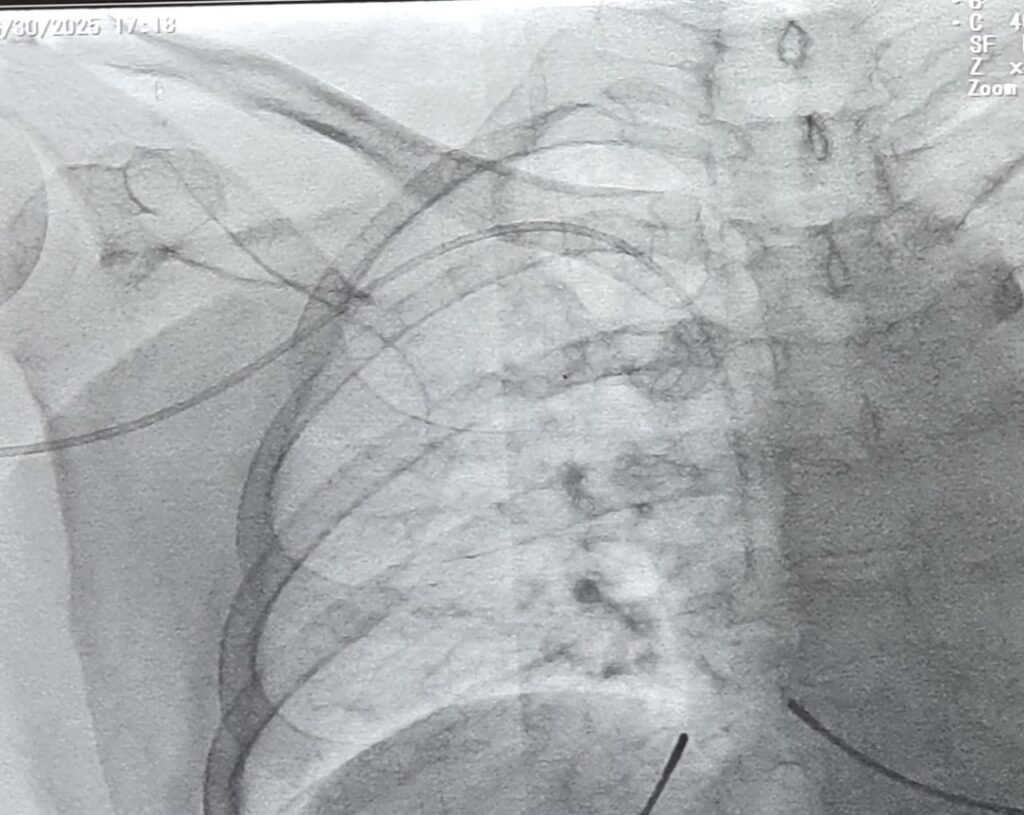
Imaging & Assessment: Ultrasound-guided venous assessment confirmed suitable basilic vein for catheter placement.
Diagnosis: Need for reliable long-term intravenous access.
Treatment Provided:
- Ultrasound-guided PICC line insertion under sterile conditions
- Catheter tip positioned in the lower superior vena cava, confirmed by fluoroscopy
- Securement device and sterile dressing applied
- Patient education provided for PICC line care and maintenance
Outcome : Successful placement with immediate availability for IV antibiotics; no complications during or after procedure.
Next Step: Patient enrolled in outpatient care plan with weekly line checks, dressing changes, and ongoing monitoring for infection or thrombosis.
NIRS Pakistan in Abbottabad offers expert care for digestive health through advanced diagnostic and therapeutic gastroenterology services.
Schedule Appointment
Your health matters—book an appointment easily and get personalized care from our expert team.