Why Stitches Are Becoming Obsolete in Modern Medical Treatments | NIRS
For decades, surgical stitches were the standard method to close wounds after surgery. While effective, stitches come with drawbacks: pain, scarring, infection risk, and extended recovery time. Thanks to advances in Interventional Radiology (IR) and minimally invasive techniques, the need for stitches is decreasing—and healthcare is evolving.
At NIRS (Northern Interventional Radiology Services), we specialize in treatments that minimize trauma, reduce hospital stays, and often eliminate the need for stitches entirely. Understanding why stitches are becoming obsolete can help patients make informed healthcare choices.
The Traditional Role of Stitches
Stitches (sutures) have historically been used to:
- Close large surgical wounds
- Stop bleeding
- Support tissue healing
However, suturing involves:
- Large incisions
- Risk of infection
- Painful removal
- Visible scarring
- Weeks of recovery
For many patients, especially those who need faster recovery, stitches present a significant inconvenience.
Modern Alternatives to Stitches
With modern medical treatments, stitches are increasingly replaced by:
- Minimally Invasive Catheter Procedures
- Tiny entry points guided by imaging, no large incisions needed.
- Medical Adhesives & Sealants
- Specialized glue that seals vessels or tissue without cutting.
- Embolization Techniques
- Treats tumors, fibroids, varicocele, or bleeding without open surgery.
- Laser & Radiofrequency Treatments
- Targets tissue without any incision.
- Endovascular Stents & Coils
- Repairs blood vessels internally, eliminating the need for external sutures.
At NIRS, these techniques reduce trauma, speed healing, and minimize complications.
How Interventional Radiology Eliminates the Need for Stitches
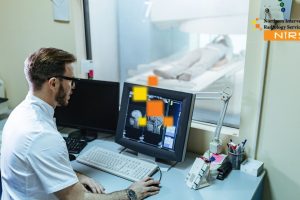
Interventional Radiology (IR) uses real-time imaging to guide precise tools through blood vessels or small entry points. Because the procedure avoids large cuts:
- Tissue trauma is minimal
- Risk of infection is lower
- Recovery is faster
- Cosmetic outcomes are superior
Many procedures, such as uterine fibroid embolization, prostate artery embolization, and varicocele treatment, no longer require sutures. Patients may go home the same day, with only a small puncture that heals naturally.
Benefits of Stitch-Free Treatments
- Reduced Pain & Discomfort
Patients avoid stitch-related soreness and irritation. - Minimal Scarring
Cosmetic results are improved—no large scars left behind. - Lower Infection Risk
Smaller entry points reduce hospital-acquired infections. - Faster Recovery
Many patients return to normal activities within hours. - Convenience & Comfort
No need for stitch removal or dressing changes at home.
Real-Life Examples
| Procedure | Traditional Surgery (Stitches) | Modern IR Treatment (Stitch-Free) |
|---|---|---|
| Uterine Fibroid Treatment | Large abdominal incision | UFE via small catheter puncture |
| Prostate Enlargement | Open prostatectomy | PAE via artery access |
| Varicocele | Scrotal incision | Embolization via vein puncture |
| Liver Tumor | Open surgery | Chemoembolization via catheter |
| Bleeding Control | Surgical repair | Embolization via IR techniques |
Who Benefits Most From Stitch-Free Treatments?
- Patients seeking faster recovery
- Elderly or high-risk patients
- Working professionals
- Cosmetic-conscious individuals
- Patients with multiple comorbidities
- Those unfit for open surgery
At NIRS, many patients who were previously told surgery with stitches was necessary now benefit from minimally invasive, stitch-free alternatives.
Psychological & Lifestyle Advantages
Stitch-free procedures improve more than just physical recovery:
- Less anxiety about surgery
- Faster return to family and work
- Higher patient satisfaction
- Reduced hospital stay stress
Patients at NIRS often report better confidence and comfort compared to traditional surgery.
Why Choose NIRS for Stitch-Free Treatments?
✔ Expert Interventional Radiologists
✔ Advanced imaging-guided procedures
✔ Minimally invasive & stitch-free options
✔ Patient-centered care
✔ Trusted across Northern Pakistan & Azad Kashmir
At NIRS, we combine cutting-edge technology with compassionate care to ensure patients heal faster, safer, and more comfortably.
Final Thoughts
The era of stitches is fading. With modern interventional radiology treatments, patients experience less pain, minimal scarring, faster recovery, and same-day discharge.
At NIRS, stitch-free procedures are not just an innovation—they are a standard of care, giving patients better outcomes and improved quality of life.