
Breast Wire Localization Placement
Expert breast imaging and surgical guidance services available at NIRS.
Breast Wire Localization Placement
Founded by Dr. Atif Nawaz and Dr. Muhammad Ismail Alvi, our Interventional Radiology Unit at NIRS Pakistan is committed to delivering precise, safe, and patient-focused breast care. Utilizing advanced imaging technologies, we offer Breast Wire Localization Placement — a minimally invasive procedure that accurately marks non-palpable breast lesions or suspicious areas, guiding surgeons for precise and effective removal.
Our expert specialists ensure careful planning, accurate localization, and personalized care — improving surgical outcomes, preserving healthy breast tissue, and enhancing quality of life through advanced, image-guided breast interventions.
Understanding Breast Wire Localization Placement
What Is It?
Breast Wire Localization is a minimally invasive, image-guided procedure used to accurately mark abnormal breast tissue or small tumors that cannot be felt by hand. This technique ensures precise surgical removal while preserving as much healthy breast tissue as possible.
When Is It Needed?
- Suspicious lesion seen on mammogram, ultrasound, or MRI
- Small breast lumps not palpable on examination
- Pre-operative marking before breast-conserving surgery
- Guidance for biopsy or further diagnostic procedures
Benefits of Wire Localization
- Accurate and targeted removal of abnormal tissue
- Preserves healthy breast tissue and appearance
- Minimally invasive and safe
- Improves surgical outcomes
- Reduces need for repeat surgeries
Why Choose NIRS Pakistan?
At NIRS Pakistan, our expert Interventional Radiologists and Breast Care Team use state-of-the-art imaging to provide precise and safe wire localization. This ensures accurate diagnosis, effective treatment, and improved cosmetic and clinical outcomes for patients.
Case Highlights
From Diagnosis to Recovery: Comprehensive Care at Every Step
Case of 42-year-old female.
History : Patient with no palpable lump but abnormal microcalcifications detected on screening mammogram.
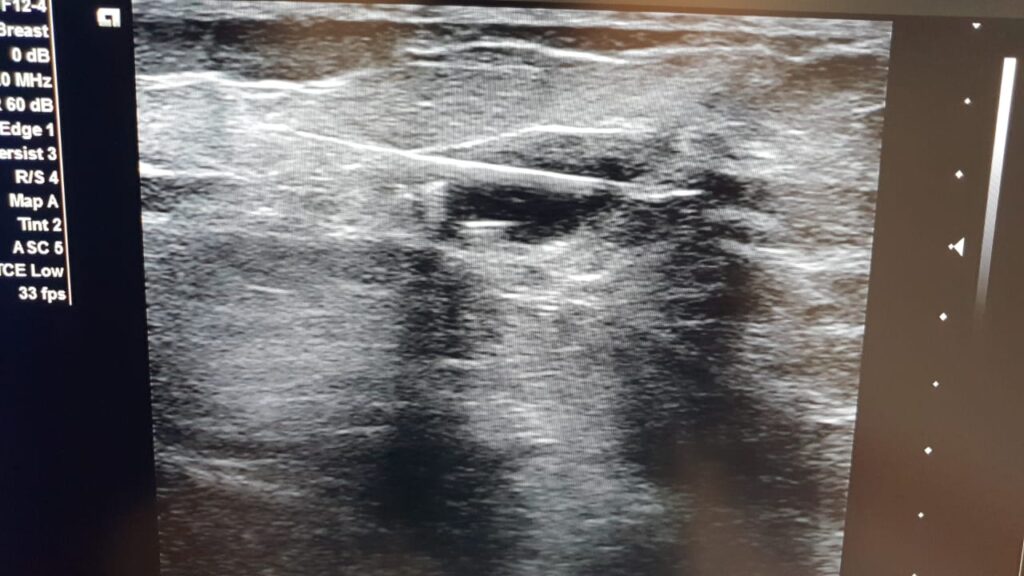
Lab Findings: Ultrasound and mammogram confirmed a small suspicious lesion deep within the breast.
Imaging: Ultrasound and CT scan revealed a localized abscess in the gall bladder fossa region.
Diagnosis: Non-palpable breast lesion requiring surgical excision.
Treatment Provided:
- Ultrasound-guided breast wire localization
- Surgical excision of marked tissue
- Histopathology confirmed early-stage ductal carcinoma in situ (DCIS)
Outcome : Lesion completely excised with clear margins, no need for repeat surgery.
Next Step: Regular breast imaging follow-up every six months.
NIRS Pakistan in Abbottabad offers expert care for digestive health through advanced diagnostic and therapeutic gastroenterology services.
Schedule Appointment
Your health matters—book an appointment easily and get personalized care from our expert team.